Kaia Health
- 4.7
- Rating
- 100.00K
- Installs
- Free
- Price

 Analysis by App-foxy
I approached Kaia Health as a practical tool for managing everyday muscle and joint discomfort, not as a replacement for a clinician. Its focus is straightforward: guided exercises that can fit into a normal routine without requiring a gym, complicated equipment, or a large time commitment. After using it, my impression is that the app works best when you treat it as a habit-building companion rather than a quick fix.
That distinction matters. Apps in the medical category often promise convenience, but convenience only helps when the exercises feel manageable enough to repeat. Kaia Health, developed by Kaia Health, is aimed at people who want structured movement support on a phone. It is free to download, rated for Everyone, and has built a sizeable audience, with more than one hundred thousand installs and a 4.7 average from roughly five thousand ratings.
My overall view is positive, especially for someone who needs a gentle nudge to move consistently. The experience is less suitable for a person looking for a detailed diagnosis, live hands-on correction, or a highly specialized rehabilitation plan. The app’s value comes from turning exercise into something easier to start and easier to remember.
You May Also Like

 Blood Strike: 2.5 Anniversary
Blood Strike’s Loadouts Turn Every Drop Into a Tactical Gamble
A close look at Blood Strike’s custom loadouts: how fast access to signature weapons reshapes its battle royale rhythm, rewards preparation, and narrows the gap between fights.

 Pandora - Music & Podcasts
Pandora’s Music Is Easy to Start, but Harder to Recover
Pandora’s strength is its low-effort path from a seed to a station. Its weak spot is how much confidence it asks you to place in connection, setup, and quiet recovery.

 8 Ball Pool
 Is Built on Rivalries, Rematches, and Routine
A close look at the rivalries, rematches, shared routines, and unanswered safety questions that turn a quick pool match into a persistent mobile community.

 Samsung Music
’s Quiet Strength Is Playing What You Already Own
Its reach comes less from spectacle than from dependable access to a personal library. That simplicity is both the app’s strongest retention engine and its ceiling.

 AccuWeather: Weather Radar
AccuWeather Review: A Quick, Clear Forecast for Everyday Decisions
For everyday plans, the best forecast is the one you can understand quickly. AccuWeather makes rain timing, radar, and local conditions easy to act on, with a few trade-offs.

 Hill Climb Racing
Why Hill Climb Racing Still Turns Crashes Into One More Run
A tiny car, a bumpy hill and one more upgrade: Hill Climb Racing keeps resurfacing because its simple chaos makes every near-miss feel personal.
More From Our News Desk



How the current experience fits into daily life
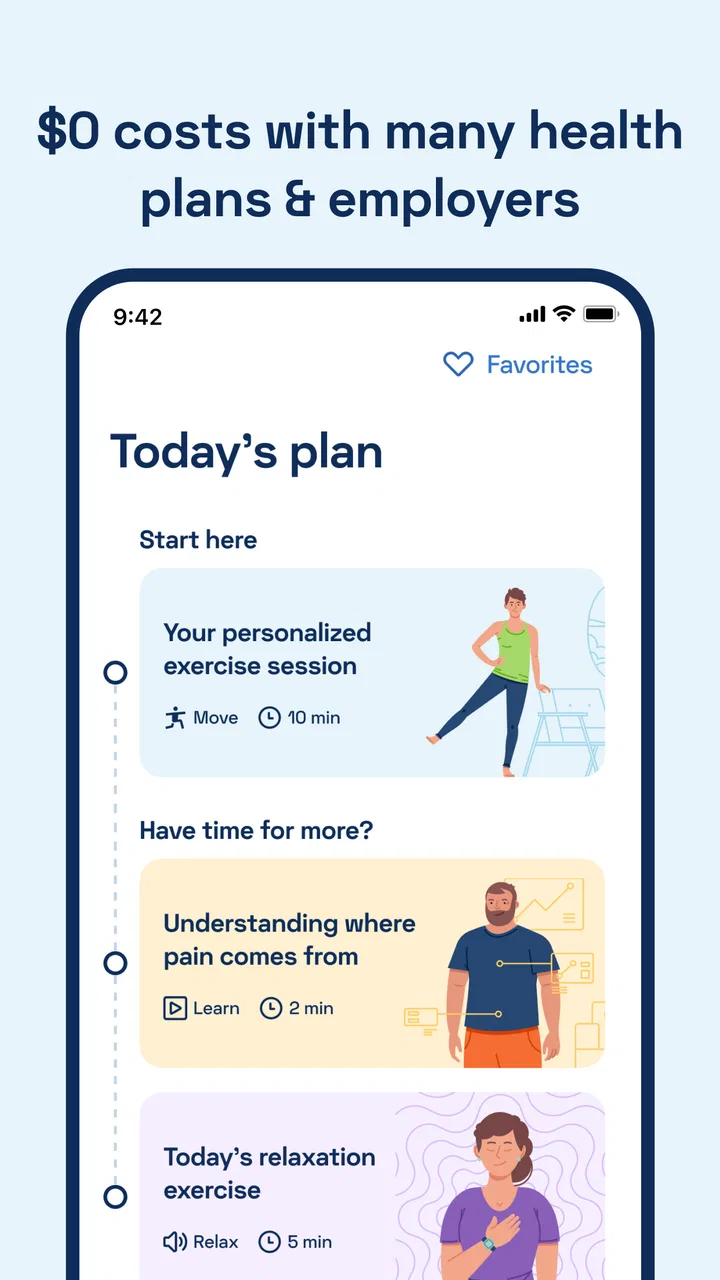
The first thing I noticed is that Kaia Health makes more sense as part of a routine than as an app opened only when pain becomes intense. Muscle and joint problems can make people cautious about movement, and that caution can lead to long periods of inactivity. A guided session gives the user a clear starting point, which is often more useful than searching through random exercise videos.
I would use it at a predictable point in the day: after waking up, during a lunch break, or before settling down in the evening. The important practical advantage is psychological. Instead of deciding what to do every time, I can open the app with the expectation that it will direct the session. That removes one small but meaningful barrier.
A realistic example would be someone who spends most of the day at a desk and notices stiffness after work. Rather than attempting an ambitious workout and abandoning it after a few days, that person could use Kaia Health as a short transition between work and home life. The session becomes a signal to change posture, move carefully, and pay attention to how the body feels before continuing with the evening.
The strongest benefit is consistency, not intensity. I would not judge this app by whether one session produces a dramatic change. I would judge it by whether the guidance makes regular movement feel less intimidating. For people managing recurring discomfort, that is a more realistic standard.
What the app is good at for beginners
Kaia Health is particularly approachable for someone who has never built an exercise routine around a physical problem. A beginner may not know which movements are sensible, how much effort is appropriate, or how to organize exercises into a sequence. A guided app can make those decisions feel less overwhelming.
It also suits users who dislike crowded fitness apps. Many general workout platforms mix strength training, weight loss, cardio, and performance goals into one large catalog. That can be useful for athletes, but it is distracting when the immediate goal is simply to move more comfortably. Kaia Health keeps the attention on muscle and joint exercises, which gives the experience a clearer purpose.
That focus does not mean every exercise will suit every person. I would still pay attention to discomfort during a session and stop if a movement feels wrong. The app can guide a routine, but it cannot physically observe alignment, compensate for an injury, or understand every detail of a user’s medical history. Anyone with serious, sudden, or unexplained symptoms should seek professional advice instead of relying on an app.
Where it differs from ordinary exercise videos
The usual alternative is to search for free videos online. That approach offers variety, but it also creates several problems: inconsistent quality, unclear progression, and the temptation to choose a routine based on its title rather than its suitability. Kaia Health’s advantage is the feeling of a more deliberate path through the exercises.
Another alternative is a general fitness app. Those services may provide more variety and stronger motivation for people who want demanding workouts, but they can be a poor match for someone whose main concern is discomfort or limited mobility. A performance-oriented program may encourage users to push harder when the wiser choice is to move carefully and observe their response.
On the other hand, a physiotherapist remains the better option when a person needs assessment, manual guidance, or a plan adjusted to a specific diagnosis. Kaia Health is more convenient and easier to revisit between appointments, but it cannot offer the same personal observation. I see it as occupying the space between doing nothing and receiving one-to-one care, not as a substitute for the latter.
What the current version suggests about the product’s direction
The current version is 2.165.0, which gives the app the feel of a maintained product rather than a one-off collection of videos. That matters to existing users because a health app needs to remain dependable over time. People are more likely to build a routine around an application that continues to receive attention than one that feels abandoned after installation.
I would be careful, however, not to confuse a newer version number with a guarantee that every personal concern has been solved. Version updates can improve the overall experience without changing the central limitation: an app still cannot replace an examination. The most useful way to view the current release is as an ongoing platform for guided exercise, not as a promise of a particular medical outcome.
The product has been available since June 2016, so it has had time to move beyond the earliest concept of simply placing exercise instructions on a phone. That history is relevant when deciding whether to try it. The app is not presenting itself as a brand-new experiment; it is an established mobile option from a developer focused specifically on digital health.
For someone already using an older release, the practical question is whether the current version feels stable and comfortable enough to support continued use. I would update when possible, then check the first few sessions rather than assuming that a change in version automatically improves personal results. If a familiar workflow has changed, taking a moment to understand it is better than rushing through exercises out of habit.
How existing users may notice the evolution
Long-term users are likely to value continuity more than novelty. In an exercise app, the most important improvement is often not a flashy addition but a smoother path from opening the app to beginning a session. Reduced friction can make the difference between following through and postponing the routine.
That is also why I would avoid constantly switching between several health apps. A person who keeps moving from one program to another may collect information without developing a repeatable practice. Kaia Health makes more sense when used as a stable reference point: open it, follow the guidance, notice the body’s response, and keep a simple mental record of what feels comfortable.
One useful habit is to use the same general time of day for several sessions before judging the experience. Stiffness can vary depending on whether the body is just waking up, has been sitting for hours, or is already tired. Keeping the context similar makes it easier to tell whether the routine fits your day, rather than blaming the app for changes caused by timing.
Another practical tip is to create enough physical space before starting. Even gentle exercises become awkward when the phone is balanced somewhere unstable or the user is trying to avoid furniture. Preparing a clear area removes interruptions and makes it easier to concentrate on controlled movement. This is a small detail, but it can improve the quality of the session more than downloading another app would.
Questions I would consider before committing
Is it genuinely free to use? Kaia Health is listed as free, which makes it easy to try without treating the first session as a financial decision. I would still approach it as a trial of fit: the absence of a download cost does not guarantee that its style of guidance will match every person’s needs.
Is it suitable for all ages? The content rating is Everyone, so the app is presented as broadly accessible. That should not be interpreted as medical clearance for every individual. Children, older adults with balance concerns, and people recovering from an operation may need advice from a qualified professional before following any exercise program.
Does it work for a specific diagnosis? I would not assume that a broad muscle and joint focus equals a diagnosis-specific treatment plan. If a doctor or physiotherapist has given you precise restrictions, those instructions should take priority. The app may be useful alongside professional care, but it should not override it.
Can it replace a gym? For gentle, guided movement, it may reduce the need for gym access. It is less convincing if your goal is progressive strength training, athletic conditioning, or access to equipment. The right choice depends on whether you need support for regular mobility or a complete training environment.
Will it fix pain quickly? That is the expectation I would actively avoid. A routine can support better movement habits, but results vary and discomfort can have many causes. The app is most credible when used patiently and cautiously, with attention to how the body responds over time.
Remaining gaps and situations where I would choose something else
The biggest gap is the lack of physical feedback that comes with an in-person professional. A video or guided instruction can show the intended movement, but it cannot reliably tell whether my posture, range, or compensations are appropriate. If I repeatedly struggle with the same exercise, I would rather ask a clinician than keep guessing.
There is also a motivation trade-off. Kaia Health can make a routine easier to start, but it may not provide enough excitement for users who are motivated by competition, music, social challenges, or visible performance targets. Someone who enjoys intense workouts may find the medical focus too restrained. That is not a flaw for its intended audience, but it is a reason to choose a different category of app.
People who want a completely personalized plan should also set realistic expectations. Personalization in a digital exercise experience is not the same as an appointment in which a professional can palpate a joint, watch a movement from several angles, and adapt immediately. If your condition changes from day to day, you may need more flexibility and oversight than a phone-based routine can provide.
Privacy and comfort are personal considerations as well. Health-related apps can feel more sensitive than ordinary fitness tools. I would only use Kaia Health in a way that feels comfortable for me, review the app’s current permissions and privacy information before sharing anything, and avoid entering details I do not understand. That is sensible practice for any medical application.
Finally, an app can encourage regular movement but cannot solve a poor working environment by itself. If desk posture, an unsuitable chair, repetitive lifting, or long periods without breaks are contributing to discomfort, the routine should be paired with changes to those habits. Otherwise, the user may be trying to offset the same trigger repeatedly.
What I would watch as the app continues to develop
For future updates, I would pay attention to how clearly the app explains exercise suitability and progression. The best development would not necessarily mean adding more content. It would mean helping users understand when to continue, when to reduce effort, and when to seek professional guidance.
I would also value improvements that make routines easier to fit around unpredictable days. A person with joint discomfort may have good mornings and difficult afternoons, so a useful app should make it simple to choose an appropriate level without creating guilt when a session is missed. Flexibility is more valuable than pressure in this category.
Another area worth watching is the balance between guidance and independence. At first, detailed instruction is reassuring. Over time, experienced users may want a quicker route into familiar exercises while still having the option to review technique. If the app can support both beginners and returning users without making either group feel lost, it will remain useful for longer.
I would also look for signs that the developer continues to respect the difference between wellness support and medical treatment. Clear boundaries build trust. A responsible health app should encourage users to notice warning signs and involve professionals when needed, rather than implying that a digital routine can handle every problem.
My practical recommendation
I would recommend Kaia Health to someone who wants a free, approachable way to introduce guided muscle and joint exercises into everyday life. It is especially appealing if you have trouble deciding what to do, prefer a quiet routine over a competitive workout, or need something more focused than a general fitness catalog.
I would skip it as my main solution if I needed a diagnosis, hands-on correction, advanced strength programming, or close supervision after an injury. In those cases, a healthcare professional or a more specialized service would be a better first choice. The app can still have a supporting role, but it should not carry responsibility that belongs elsewhere.
After considering its current release, long availability, free access, and broad audience, I see Kaia Health as a sensible starting point rather than a complete answer. Its real strength is reducing the effort required to begin a careful movement routine. Its real weakness is the unavoidable distance between digital instruction and personal clinical assessment.
That balance is why I would suggest trying it with modest expectations. Give the routine a consistent place in your day, prepare a safe space, pay attention to how your body responds, and treat discomfort as information rather than a challenge to push through. Used that way, Kaia Health is a practical companion for building steadier movement habits, provided you know when an app is enough and when a professional should take over.
FAQs for Kaia Health
01What is Kaia Health and how does it work?
Kaia Health is a digital therapy app designed to help users manage chronic pain, particularly back pain and COPD (Chronic Obstructive Pulmonary Disease). It uses a combination of physical exercises, relaxation techniques, and educational content to guide users through personalized therapy sessions. The app leverages AI to adapt to the user's needs and progress.
02Is Kaia Health available for free, or does it require a subscription?
Kaia Health offers a limited free version, but to access the full range of features, users need to subscribe to a premium plan. The subscription provides access to personalized exercise plans, daily progress tracking, and additional educational resources. Pricing may vary, so it's best to check the app store for the latest details.
03What devices are compatible with Kaia Health?
Kaia Health is available for both Android and iOS devices. Users can download the app from the Google Play Store or Apple App Store. It is compatible with most modern smartphones and tablets, but it's recommended to check the specific system requirements to ensure optimal performance.
04How does Kaia Health ensure the privacy of user data?
Kaia Health prioritizes user privacy by adhering to strict data protection regulations, including GDPR compliance. The app collects only necessary data to provide personalized therapy, and all information is stored securely. Users can review the app’s privacy policy for detailed information on data handling and storage practices.
05Are the exercises in Kaia Health safe for everyone to perform?
The exercises in Kaia Health are designed by medical professionals to be safe for most users. However, individuals with specific medical conditions or concerns should consult with a healthcare provider before starting any new exercise program. The app allows users to adjust the intensity and difficulty of exercises to suit their personal needs.
Pros
- User-friendly interface that's easy to navigate.
- Comprehensive exercise programs included.
- Customizable workout plans for all levels.
- Access to professional health advice.
- Tracks progress with detailed analytics.
Cons
- Limited features in the free version.
- Requires constant internet connectivity.
- Some exercises lack video demonstrations.
- Occasional bugs in syncing data.
- Limited integration with other health apps.

Kaia Health
Gallery